LinguaPal - AI Language Tutor
Applications ArenagarageEducation
4.164.00 Reviews
- Version
- 7.5
- Installs
- 10.00M
- Age Rating
- Everyone
Screenshots
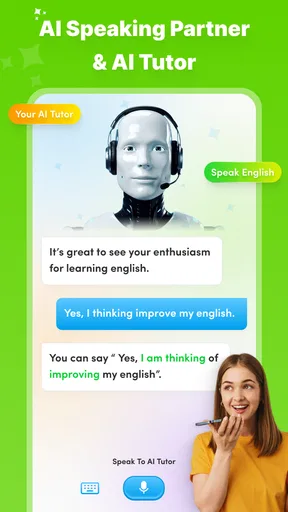
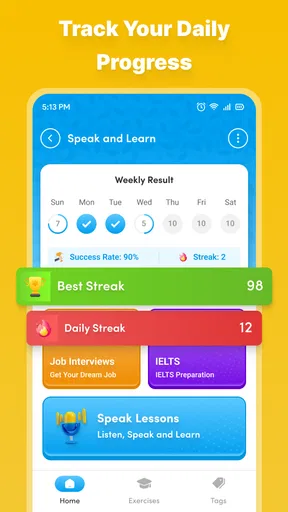
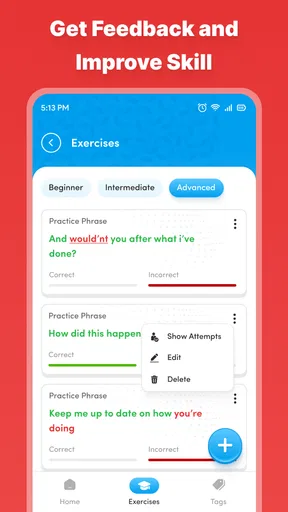
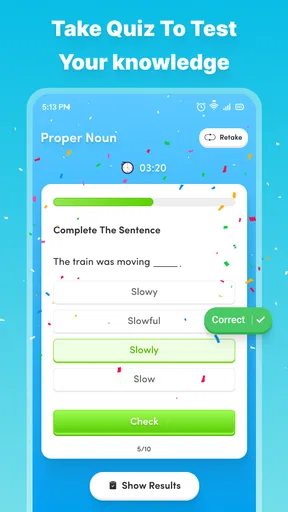
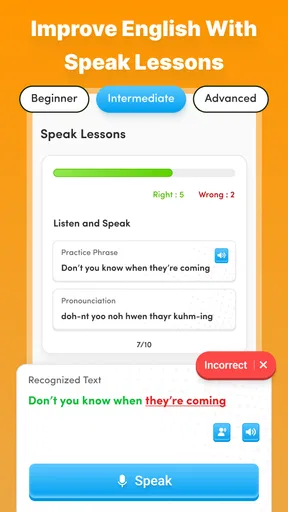
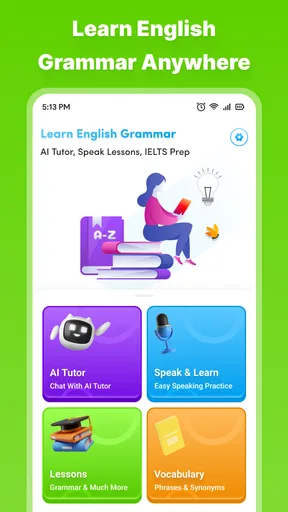
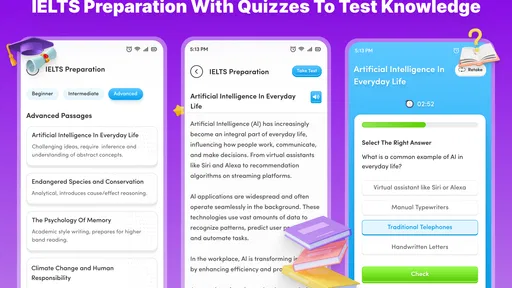
Our Review of LinguaPal - AI Language Tutor
 Analysis by Appyee
Learning English is easy to start and surprisingly difficult to maintain. I have tried plenty of language tools that were good at presenting vocabulary but less useful when I actually needed to speak. LinguaPal - AI Language Tutor takes a more conversation-focused approach. It is an education app from Applications Arenagarage, built around speaking lessons and vocabulary practice rather than treating English as a list of isolated translations.
My first impression is that LinguaPal makes the most sense for someone who already knows some basic English but hesitates when forming sentences aloud. It can also suit learners who want short practice sessions without arranging a class or opening a large course platform. The important question is not whether it replaces a teacher; it does not. The better question is whether its speaking-centered routine gives you a practical reason to use English every day.
The app is free to install and is suitable for Everyone. It has reached over ten million installs and holds a 4.1 average from around ten thousand ratings, which suggests that the format appeals to a broad audience. I would still judge it by your learning habits rather than popularity. A widely installed app can be useful, but consistency and the type of practice matter much more than the download figure.
How I Would Decide Whether LinguaPal Fits
I would judge LinguaPal by whether it earns a regular place in your routine after the first burst of curiosity. I’d start with one recurring situation where speaking English matters, then notice whether the lessons help you respond with less hesitation. That gives us a practical way to weigh the effort of keeping up the habit against the value it brings over time.
Start with your real English problem
Before choosing any language app, I would identify the exact point where I get stuck. If I forget common words, a vocabulary tool may be enough. If I understand written English but freeze during conversation, speaking practice becomes more valuable. If I need structured grammar explanations, a traditional course may serve me better than an AI tutor.
LinguaPal is most relevant to the second situation. Its central promise is not simply “learn more words”; it connects vocabulary work with speaking lessons. That combination is useful because recognition and production are different skills. I may recognize appointment on a screen but still fail to use it naturally when explaining my schedule. Practicing the word in a spoken context is closer to the problem I face outside an app.
I also look at how much friction an app creates. A lesson that takes too long to begin can become something I postpone. LinguaPal is easier to evaluate if I treat it as a small daily speaking habit instead of a complete academic course. I would open it with one narrow goal, such as practicing travel phrases, describing a work task, or reviewing words I repeatedly misuse.
What the app is trying to improve
The combination of an AI tutor, English lessons, and vocabulary activities points toward guided practice rather than passive reading. That matters for learners who need prompts to keep a conversation moving. Instead of deciding what to study from a blank page, I can use a lesson as a starting point and focus on producing an answer.
One useful way to approach it is to separate three stages. First, I review a small group of words. Next, I try to use them in spoken answers. Finally, I note which words I avoided or replaced with simpler ones. That last step is easy to skip, but it reveals a weakness that ordinary flashcards often hide. If I always understand a word but never say it, I have learned recognition, not comfortable communication.
I would not expect the app to solve pronunciation, grammar, listening, and spontaneous conversation equally well for every learner. AI practice can provide repetition and immediate interaction, but it is still different from a human conversation partner who can notice hesitation, cultural context, or an unusual meaning. LinguaPal works best as a bridge between studying alone and speaking with other people.
A practical routine for a busy day
Imagine I have a short break before work and an English meeting later in the week. I could use LinguaPal to rehearse vocabulary connected with updates, deadlines, and questions. Rather than trying to memorize a long list, I would choose a few useful expressions, say complete answers aloud, and repeat the exercise without reading every word.
The benefit of this workflow is that it turns vocabulary into a response. I am not merely asking, “Do I know this word?” I am asking, “Can I use it quickly when someone asks me something?” That is a more demanding test and a better preparation for real conversation. It also gives me a reason to return to words that felt familiar but did not come naturally.
For travel, I would use the same idea differently. I might practice asking for directions, checking a reservation, or explaining a dietary preference. For a student, the focus could be presenting an opinion or summarizing a reading. For a parent, short speaking sessions could fit around household tasks. The app is flexible enough to support these intentions, but the learner still has to supply the discipline and choose meaningful situations.
Where LinguaPal feels strongest
The strongest part of the experience is the emphasis on active language use. Many education apps make progress feel comfortable because tapping an answer is easier than producing one. LinguaPal is more useful when I deliberately resist that comfort and answer aloud, even if my sentence is imperfect.
I also like the connection between lessons and vocabulary. Learning words in isolation can create a false sense of progress. By placing vocabulary practice near speaking work, the app encourages me to test whether new language is available under pressure. That is a small but important design choice for anyone whose main goal is conversation.
Another strength is accessibility. The app is free to download, and its minimum requirement of Android 8.0 makes it available to many people using older phones. The current version is 7.5, so the product is not presented as an abandoned experiment. I would still keep expectations realistic: accessibility makes practice easier to begin, but it does not guarantee that every lesson will match my level or preferred learning style.
The free entry point is especially helpful for cautious learners. I can see whether I enjoy speaking to an AI tutor before deciding whether extra content is worth paying for. In-app purchases range from $3.99 to $19.99 per item, so I would examine what each optional purchase adds and avoid paying simply because I feel guilty about an unfinished study streak.
Three ways to get more from it than a casual user
My first tip is to use delayed repetition instead of repeating a lesson immediately until it feels easy. After practicing a group of words, I would leave them alone and return later without looking at the answers first. The uncomfortable recall attempt tells me more than a perfect result achieved through instant repetition.
My second tip is to keep a “replacement list.” Whenever I avoid a target word and use a simpler expression, I would write down both versions. For example, if I repeatedly say “meeting time” instead of a more precise phrase, I know which vocabulary needs speaking practice. This turns the app into a diagnostic tool, not just a lesson player.
My third tip is to speak beyond the minimum answer. If a prompt asks me to describe a plan, I would add a reason, a detail, and a possible problem. This creates a miniature conversation and exposes gaps that a one-sentence response may conceal. It also prevents AI practice from becoming a pattern of short, safe replies.
A fourth useful habit is to record a private before-and-after sample outside the lesson environment, using the same topic on different days. I would listen for pauses, repeated words, and unfinished sentences rather than judging my accent harshly. The point is to notice whether I can express more with less hesitation, which is a more meaningful personal measure than simply completing activities.
Where another type of app may fit better
LinguaPal is not automatically the best choice for every English learner. Someone starting from zero may prefer a highly visual course with a carefully sequenced alphabet, pronunciation, and grammar path. A speaking tutor can feel demanding when I do not yet understand the basic words needed to answer a prompt.
It may also be a weaker fit for learners preparing for a specific exam. Exam preparation usually depends on fixed task formats, timed practice, writing correction, and detailed explanations of scoring criteria. A general speaking-and-vocabulary app can support overall ability, but I would not make it my only study method for a high-stakes test.
People who need live human interaction may prefer a conversation exchange or a teacher-led service. A human can react to my personality, professional context, humor, and misunderstandings in ways an automated tutor may not. LinguaPal has an advantage in convenience and privacy, but that convenience is also its boundary: practicing with software is not identical to negotiating meaning with another person.
Traditional flashcards may be better for a learner who already has strong speaking ability and only wants rapid vocabulary review. Conversely, a grammar-focused course may be better for someone who keeps making the same structural mistakes and wants explicit explanations. I would choose LinguaPal when speaking confidence is the bottleneck, not merely because it belongs to the education category.
Small frictions worth considering
The main limitation is the risk of mistaking interaction for mastery. An AI tutor can make practice feel personal, but I still need to transfer the skill to real conversations. If I only respond to familiar prompts, I may become comfortable inside the app while remaining slow in an unpredictable discussion. I would therefore pair the lessons with occasional real-world use, such as speaking with a friend, joining a study group, or explaining a daily event aloud without assistance.
Another possible friction is motivation. Vocabulary practice can become repetitive if I approach it as a checklist. The app gives me a useful setting, but it cannot decide why a word matters to my life. I get better results when I tie lessons to a concrete need, such as a presentation, a trip, or a recurring conversation at work.
There is also a cost decision. Because the app is free to begin but offers paid items, I would test my routine before buying anything. If I use it several times and can identify a clear benefit, an optional purchase may be easier to justify. If I rarely open it, paying for more material will not fix the underlying habit problem.
Finally, I would be patient with imperfect answers. The goal of speaking practice is not to produce flawless English on the first attempt. If I stop whenever I make a mistake, I lose the very fluency practice the app is designed to encourage. I would use corrections as clues, then try the same idea again in a simpler and more natural sentence.
Who should install it
I would recommend LinguaPal to an intermediate learner who understands a fair amount of English but needs more opportunities to speak. It is also a sensible option for a shy learner who wants to rehearse privately before talking to people. The free starting point lowers the risk, and the Everyone rating makes it approachable for a broad audience.
I would be more selective for advanced learners. If I already speak comfortably and need specialist vocabulary, nuanced feedback, or professional editing, the app may be better as a warm-up than as my main resource. I would also hesitate to recommend it as the only tool for a beginner who needs a carefully staged foundation or for an exam candidate with narrow test objectives.
Applications Arenagarage has positioned this app around a clear need: connecting English lessons with spoken vocabulary practice. That focus is more useful to me than a tool that only rewards recognition. Still, the value depends on how actively I use it. Tapping through a lesson while avoiding speech would reduce its main advantage.
My final decision
After weighing the alternatives, I see LinguaPal as a practical speaking companion rather than a complete replacement for a course, teacher, or real conversation. Its best use is a repeatable routine: review a manageable set of words, answer aloud, expand the response, and revisit the expressions that did not come naturally. That workflow gives the app a clear role in my learning rather than asking it to do everything.
I would choose it when convenience, private rehearsal, and vocabulary-to-speaking practice matter most. I would choose another category of resource when I need live correction, exam structure, deep grammar instruction, or specialist language. That distinction keeps the recommendation honest.
My recommendation is to try LinguaPal as a daily speaking tool, not as a shortcut to fluency. If you are willing to answer aloud and connect lessons with situations you actually face, it can turn passive vocabulary into more usable English. If you only want quick flashcards or a fully human tutor, another option may fit better. For learners who need a low-pressure place to practice saying more, this free education app is worth making part of the routine.
Verdict
Strengths of LinguaPal - AI Language Tutor
- Personalized practice adapts to your learning pace and recurring mistakes.
- AI conversations offer a low-pressure way to build speaking confidence.
- Useful for quick vocabulary reviews during short breaks.
- Interactive exercises can make routine language study feel less repetitive.
- Suitable for learners seeking extra practice outside formal lessons.
Limitations of LinguaPal - AI Language Tutor
- AI feedback may occasionally miss context or suggest unnatural phrasing.
- Advanced features may require a subscription or include usage limits.
- Conversation quality depends heavily on the language and topic selected.
- It should complement, not replace, guidance from a qualified language teacher.
- Privacy-conscious users may hesitate to share voice or learning data.
Similar Picks in This Category
View All
Duolingo: Language Lessons
Duolingo4.7

Google Classroom
Google LLC2.8

Unacademy: Learn & Crack Exams
Unacademy3.2

Bible App for Kids
Life.Church4.4

Cake - Learn English & Korean
Cake Corp.4.7

Brainly: AI Homework Helper
Brainly4.5
Frequently Asked Questions
What is LinguaPal - AI Language Tutor, and how does it work?
LinguaPal - AI Language Tutor is an AI-powered language-learning app designed to help users practice vocabulary, grammar, pronunciation, and everyday conversation. After choosing a target language and setting learning preferences, you can interact with the virtual tutor through guided exercises or conversational practice. The app is intended to complement regular study, offering immediate feedback and flexible sessions rather than replacing a complete classroom course.
Which languages can I learn with LinguaPal - AI Language Tutor?
The languages available in LinguaPal may depend on the current app version, your device, and the developer’s supported language list. Before downloading, check the official store description to confirm that both your preferred learning language and interface language are included. AI conversation quality can also vary between languages, so advanced learners may want to test the app with a free version or trial before subscribing.
Is LinguaPal suitable for beginners, or is it better for advanced learners?
LinguaPal can be useful for several skill levels because practice may be adjusted through basic lessons, vocabulary activities, and open-ended conversations. Beginners can use it to build confidence with common phrases and simple sentences, while intermediate or advanced learners may benefit more from conversation practice and correction. However, users who need a structured academic syllabus, exam preparation, or specialist terminology may need additional learning resources.
Does LinguaPal require an internet connection, and can I use it for free?
Because LinguaPal relies on AI-generated responses and, in many cases, cloud-based processing, an internet connection may be required for conversations, corrections, or other interactive features. The app may offer free access with limits, advertisements, or selected exercises, while premium tools could require a subscription or in-app purchase. Review the current pricing, trial terms, renewal policy, and offline availability before committing to a plan.
How accurate and private are LinguaPal’s AI corrections and conversations?
LinguaPal can provide helpful instant feedback, but AI tutors are not infallible. Explanations, translations, pronunciation assessments, or suggested phrases may occasionally be incomplete, unnatural, or incorrect, particularly with slang and regional usage. Treat the app as a practice companion and verify important language questions with trusted sources. Also review its privacy policy to understand how voice recordings, messages, account details, and learning data are stored or processed.
